

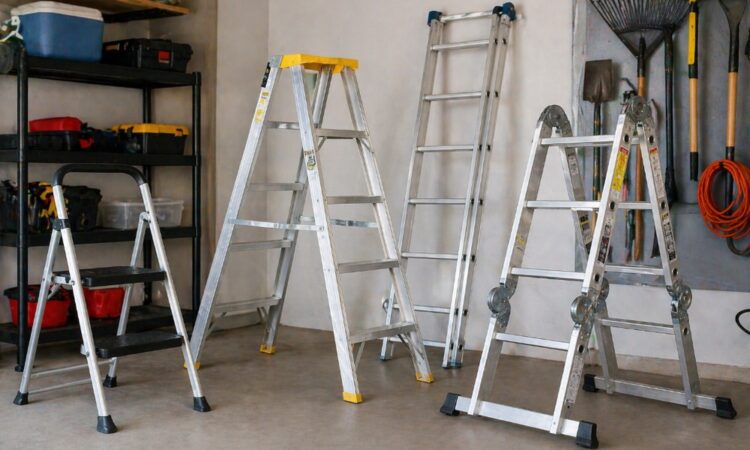
A ladder seems like a simple tool. You need to reach something high, so you buy one. That sounds easy enough. But once you start looking, you may notice there are more choices than expected. Step ladders, extension ladders, platform ladders, multi-position ladders, aluminum ladders, fiberglass ladders, and different weight ratings can make the decision feel a little confusing.
Choosing the right ladder for home use matters because the wrong ladder can make a simple job harder and less safe. The right ladder helps you complete tasks more comfortably, whether you are changing a light bulb, painting a wall, cleaning gutters, reaching a shelf, or trimming small branches.
The best ladder is not always the biggest one. It is the one that fits your home, your projects, and your comfort level.
Think About the Jobs You Need It For
Before buying a ladder, think about how you plan to use it most often. This is the easiest way to narrow down your choices.
For indoor jobs, a step ladder is usually enough. It works well for reaching cabinets, replacing light bulbs, changing air filters, hanging curtains, or painting walls. Step ladders stand on their own, so you do not need to lean them against a wall. They are also easy to move from room to room.
For outdoor jobs, you may need something taller. Cleaning gutters, reaching the roofline, or working on the outside of the house usually requires an extension ladder. Extension ladders are made for height, but they must lean against a strong and stable surface.
Some homeowners may need both. A small step ladder is useful for everyday tasks, while a taller extension ladder is better for outdoor work.
Know the Main Ladder Types
There are a few common ladder types used around the home.
A step ladder is self-supporting and usually has flat steps. It is one of the most useful ladders for basic household tasks.
An extension ladder is longer and can be adjusted to reach higher areas. It is often used outside for gutters, siding, or roofline access.
A platform ladder has a larger standing area near the top. This can feel more comfortable when you need to stand in one spot for longer, such as while painting.
A multi-position ladder can be adjusted into different shapes. It may work as a step ladder, extension ladder, or stair ladder, depending on the design. This type is flexible, but it can also be heavier and a little more complicated to set up.
Each type has a purpose. Choosing the right one depends on where and how you plan to use it.
Choose the Right Height
Height is one of the most important things to consider. Many people think they should buy the tallest ladder possible, just in case. But that is not always the best idea.
A ladder that is too short may tempt you to stand too high or overreach. That can be dangerous. A ladder that is too tall may be hard to carry, move, and store.
For many indoor jobs, a 4-foot to 6-foot step ladder is enough. It can help you reach ceilings, shelves, cabinets, and light fixtures in most homes.
For outdoor work, the right height depends on your house. If you need to reach gutters or the roofline, you may need an extension ladder. Remember, your working reach is not the same as the ladder’s full height. You should never stand on the very top of most ladders, so choose a size that lets you work safely from a lower step.
Pick the Right Material
Most home ladders are made from aluminum or fiberglass.
Aluminum ladders are lightweight and easy to carry. They are a good choice for many general home tasks because they are simple to move and store. However, aluminum conducts electricity. That means it should not be used near power lines or for electrical work.
Fiberglass ladders are heavier, but they are often stronger and safer around electrical tasks because they do not conduct electricity the same way aluminum does. They can be a good choice if you may work near outlets, wiring, or outdoor electrical areas.
The best material depends on your needs. If you want something light for basic household use, aluminum may be practical. If electrical safety is a concern, fiberglass may be the better choice.
Check the Weight Rating
Every ladder has a weight rating. This tells you how much weight the ladder is designed to hold. This does not only mean your body weight. It also includes tools, paint cans, supplies, and anything else you carry while climbing.
Do not ignore this detail. A ladder may look strong, but the rating tells you what it is built to support.
It is usually smart to choose a ladder with more capacity than you think you need. That gives you a better safety margin and makes the ladder feel more reliable during regular use.
Think About Storage
A ladder is only helpful if you can store it and use it easily. Before buying one, think about where it will go.
Do you have garage wall space? Will it fit in a shed? Can you carry it without help? Will it be too bulky to move through doors or hallways?
A large ladder may sound useful, but if it is hard to store, you may avoid using it. For smaller homes, a foldable step ladder or multi-position ladder may be easier to manage.
Look for Safety Features
Small safety features can make a ladder much easier to use. Look for non-slip feet, wide steps, strong locking hinges, and sturdy spreaders. A tool tray or top platform can also be helpful for holding screws, paint brushes, or small tools.
Comfort matters too. If the steps are too narrow, your feet may get tired quickly. If the ladder feels shaky, you may not feel confident using it.
Use the Ladder Correctly
Even the best ladder can be unsafe if used the wrong way. Always place it on a flat, stable surface. Do not lean too far to one side. Climb down and move the ladder instead. Never stand on the top step unless the ladder is designed for it.
Also, check the ladder before each use. Look for cracks, loose parts, bent rails, or damaged feet. If something looks unsafe, do not use it.
Final Thoughts
Choosing the right ladder for home use comes down to your projects, height needs, material preference, weight rating, and storage space.
The best ladder is not always the tallest or most expensive one. It is the ladder that helps you work safely and comfortably. When you choose carefully, a good ladder becomes one of the most useful tools in your home.
This post was written by a professional at Anawalt Lumber. Anawalt Lumber is a family-owned lumber yard and hardware store serving Los Angeles for over a century. Known for quality lumber, contractor supplies, Hollywood hardware store, and a full-service nursery, Anawalt provides personalized service for homeowners and licensed contractors. From job pricing and bulk discounts to special-order materials with fast delivery, Anawalt is your trusted local building supply partner in Malibu, West LA, and Hollywood.