

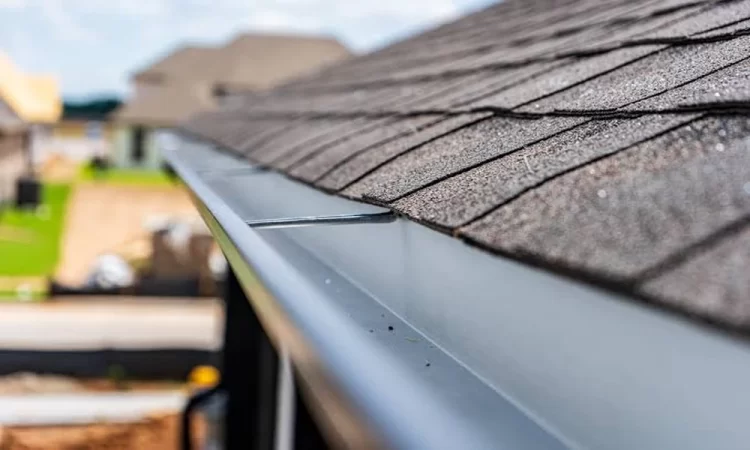
Gutters do their work during the worst weather of the year, which is exactly when nobody wants to go outside and look at them. A single inch of rain falling on a 1,000-square-foot roof sends roughly 600 gallons of water toward the edges of the house. Every gallon has to go somewhere. When gutters handle it well, you never think about them. When they don’t, the water finds the fascia, the siding, the landscaping and eventually the foundation.
Homeowners looking into Charlestown gutter replacement usually start out asking about price. The questions that matter more are usually different ones. Is the old system actually worn out, or just neglected? Was it the right size to begin with? Does the new system need to work alongside a roof that’s also getting older? The answers decide whether a new set of gutters lasts 25 years or starts sagging after five.
Gutters seldom fail in one dramatic moment. They wear out at the seams, the hangers and the joints long before the material itself gives up. Knowing where to look makes the decision much clearer.
Cleaning or Replacing?
Many gutters that seem broken are simply clogged. Water spilling over the front edge during a storm often means leaves, shingle grit or a nest is blocking a downspout. Clearing the blockage and flushing the line with a hose fixes the problem in an afternoon.
Replacement starts to make sense when the trouble keeps coming back after cleaning, or when the gutter itself is physically compromised. That line can be hard to see from the ground, so a closer look from a ladder, done safely, tells you far more.
Five Signs the System Has Reached Its Limit
- Separating seams. Sectional gutters are joined every 10 feet or so. Over the years, sealant dries out and the joints begin to drip, leaving rust streaks or stains on the siding below.
- Pulling away from the house. Hangers loosen as the fascia board behind them softens. A gutter that leans outward can’t carry water, and it puts more strain on every remaining fastener.
- Standing water. Gutters need a slight slope toward the downspouts. When sections sag, water pools in the low spots, adds weight and speeds up corrosion.
- Cracks, holes and rust. Small holes can be patched. Widespread rust or splits along the bottom mean the metal has thinned too much to save.
- Damage below the gutter line. Peeling paint, rotting fascia, washed-out mulch beds and a damp basement often trace back to water escaping where it shouldn’t.
One sign alone may only call for a repair. Three or more usually point toward a full replacement.
Seamless or Sectional
The biggest change in gutter installation over the past few decades is the move toward seamless systems. Installers bring a forming machine to the house and run each length of gutter to fit the wall exactly. The only joints are at the corners and the downspout outlets.
Fewer seams means fewer places to leak, which is why seamless aluminum has become the standard choice for most homes. Sectional gutters still cost less up front and are easier for a do-it-yourselfer to handle. Over time, though, the extra joints tend to need more attention.
Choosing a Material That Fits the House
Aluminum leads the market because it resists rust, weighs little and comes in dozens of factory-finished colors. Thicker gauges hold up better against ladders, falling branches and the weight of snow and ice.
Galvanized steel is stronger and handles impact well, but it can rust once the coating wears through. Copper costs the most and lasts the longest, slowly turning green over the years, which is why it shows up most often on historic or high-end homes. Vinyl is the cheapest choice. It can turn brittle in hard freezes and warp in strong summer sun, so it suits mild climates better than places with real winters.
Size Matters More Than Most People Realize
Older homes often have 5-inch gutters with small 2-by-3-inch downspouts. That setup worked fine for many roofs, but steep pitches, large roof areas and the heavier downpours common in recent years can overwhelm it.
Moving up to 6-inch gutters with 3-by-4-inch downspouts noticeably increases how much water the system can carry. The difference shows most on valleys, where two roof planes funnel water into one corner and often shoot it straight over a gutter that’s too small. A good installer measures roof area and pitch rather than simply matching what was there before.
Downspouts Finish the Job
A gutter is only as good as the spot where its water ends up. Downspouts that empty right beside the foundation can undo everything the gutters accomplish. Extensions, splash blocks or buried drain lines should carry water several feet away from the house.
Some homeowners send part of that runoff somewhere useful. The EPA’s Soak Up the Rain program explains how rain barrels can collect roof water for gardens and lawns. It also points out that roof runoff can pick up bacteria and chemicals, so it isn’t ideal for watering vegetables. A barrel also needs an overflow route back away from the foundation, or a full barrel just moves the problem.
Guards and Covers Deserve an Honest Look
Gutter guards are sold as a way to never clean gutters again. The truth is more modest. Fine mesh screens keep out most leaves and pine needles but can still collect shingle grit and seed pods on top. Reverse-curve hoods shed debris well but may let heavy rain overshoot the gutter on steep roofs.
Guards are most worth the cost on homes surrounded by tall trees, or where climbing a ladder twice a year isn’t safe or practical. On a house with few trees nearby, the money may do more good going toward thicker gutters or bigger downspouts.
Timing the Replacement With the Roof
Gutters and roofs age side by side, and the two jobs overlap more than people expect. Replacing a roof often disturbs the gutters, since drip edge and the first row of shingles sit right over them. If both are near the end of their lifespans, doing them together avoids paying for the same edge work twice.
The fascia board is the other piece to watch. New gutters hung on soft, rotting wood won’t stay put for long. Replacing damaged fascia during the gutter job adds some cost up front, but it gives the new system something solid to hang on for decades.
Good gutters go unnoticed most of the year, and that’s the goal. When water flows cleanly off the roof, through the downspouts and away from the foundation, the rest of the house gets to stay dry. A careful look at seams, slope, size and the wood behind the system will tell you whether your gutters need a tune-up or a fresh start.