
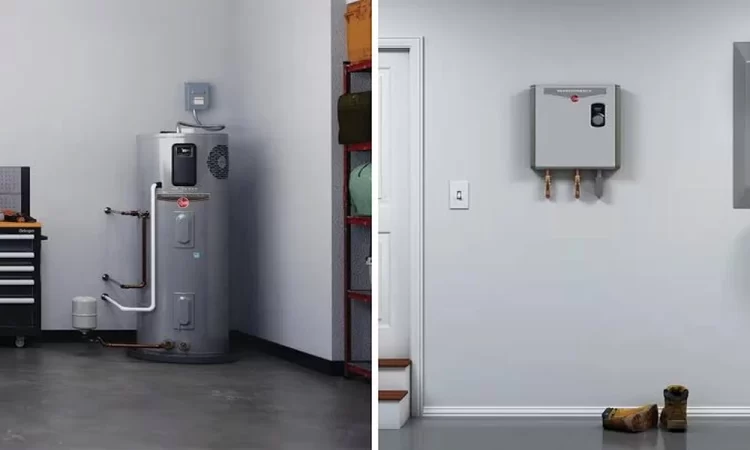
Two houses on the same Bel Air cul-de-sac can lose their water heaters in one cold week and end up with different replacements. One gets a tall white heat pump unit humming beside the sump pit. The other gets a compact tankless box mounted on the wall where the old tank used to stand. Neither family made a mistake. Their basements were simply asking different questions.
Efficiency ratings matter, but the room around the heater, the water flowing into it and the way a household uses hot water decide which machine will be content down there for the next fifteen years.
Someone who has stood in hundreds of Harford County basements spots the patterns quickly. plumbcrazy.biz, the Abingdon team that has been handling Bel Air Stewards water heaters work since 1986, installs standard tanks, tankless systems and heat pump units alike, and it appears on ENERGY STAR’s list of vetted heat pump water heater installers for Maryland.
Start With the Room Instead of the Brochure
Before comparing models, walk downstairs and take stock. A few facts about the room rule options in or out faster than any spec sheet.
- Air volume. Heat pump water heaters pull warmth from the surrounding air, and most manufacturers want somewhere between 450 and 700 cubic feet around the unit. A 10 by 10 room with a 7 foot ceiling lands right at 700.
- Winter temperature. An unfinished Maryland basement usually sits in the 50s and low 60s through winter, which works fine. Below roughly 40°F, a heat pump unit leans on its backup electric elements and loses most of its advantage.
- A place for water to go. Heat pump units drip condensate, and so do condensing tankless models. A floor drain, sump pit or small condensate pump has to be part of the plan.
- Power and gas capacity. Note whether a spare 240 volt circuit exists, how large the gas line is, and how much room the electrical panel has left.
- The vent path. Check whether the current heater vents into a masonry chimney that it shares with the furnace.
Where the Heat Pump Earns Its Keep
A heat pump water heater works like a refrigerator turned inside out. It moves heat out of the basement air and into the tank, using roughly a quarter to a third of the electricity a standard electric tank would burn. Homes already running an electric tank see the biggest drop in their bill.
There is a side effect worth planning around. While running in heat pump mode, these units pull something like 2,500 to 5,000 Btu per hour out of the surrounding space. In a sticky Maryland July that feels like a free dehumidifier working alongside the water heater. In a finished rec room in February, it can feel like a draft. When the only available spot is a cramped utility closet, this space and airflow guide shows how ducting or louvered doors can give the unit enough air to breathe.
These units stand taller than a standard tank, need clearance for cleaning an air filter, and hum about as loudly as a dehumidifier. A hybrid mode switches on the electric elements when relatives visit and showers stack up. Newer 120 volt plug-in models can sometimes reuse an existing outlet, sparing homeowners a new circuit. The upfront price runs higher than a plain tank, though utility rebates offered through Maryland’s EmPOWER program often narrow that gap considerably.
Tankless Lives and Dies by January Water
A tankless heater warms water only as it flows through, so it never runs out. Its real limit is temperature rise rather than storage. Water entering a Harford County home in midwinter often arrives somewhere in the mid 40s to low 50s, which means the heater has to lift it about 70 degrees to reach a comfortable 120°F. A unit that easily feeds two showers in September can falter when a shower, the dishwasher and a laundry load all call for hot water on a January morning.
Gas tankless models often need a three quarter inch gas line and a meter that can feed a burner firing near 200,000 Btu. Venting usually switches to PVC or stainless through a side wall, and condensing units need a neutralizer for acidic condensate. Electric whole house tankless units sound tidy, but they can demand well over 100 amps, which rules them out for many older Bel Air homes still running 100 or 150 amp panels.
An annual descaling flush keeps mineral buildup from choking the heat exchanger, especially on well water in the northern part of the county. In return, a well kept tankless unit can last close to twenty years and frees up floor space.
The Plain Tank Still Has Its Defenders
A conventional tank remains the simplest swap. It usually connects to existing pipes and venting, often goes in the same day, and costs the least to buy. A gas tank with a standing pilot keeps making hot water through a power outage, which matters after the summer storms and ice events that knock out lines across the county. Heat pump and tankless units both need electricity to run.
Expect eight to twelve years from most tanks, plus standby heat loss as stored water cools between uses. Yearly sediment draining and periodic anode rod checks stretch that lifespan. Electric tank buyers should also know that federal efficiency rules finalized in 2024 are set to steer most new electric tanks toward heat pump designs before the decade ends.
The Chimney Nobody Thinks About
When a gas water heater shares a masonry chimney with a gas furnace and gets replaced by a heat pump unit or a side vented tankless, the furnace is left alone in a flue sized for two appliances. That oversized flue may never warm enough to draft properly, which invites condensation inside the chimney and, in the worst cases, exhaust gases lingering where they should not. A chimney liner often solves it, and it belongs in the quote from the start.
Fitting the Machine to the Household
Picture a retired couple in a rancher with an electric tank and a roomy unfinished basement. That house is practically built for a heat pump. A family of five with teenagers, natural gas service and a cramped utility closet tends to do better with a properly sized condensing tankless or a high recovery gas tank. A home where outages linger for days may value a gas tank above everything else. And when the heater lives in a closet beside a finished basement office, tankless or a ducted heat pump installation keeps the chill away from the desk.
The smartest move is deciding before the old tank forces the issue. If the current heater is past its tenth birthday, get quotes that spell out venting changes, gas line upgrades, electrical work and condensate drainage. Ask each installer how their recommendation performs on the coldest morning of the year, not just the average one. A choice made calmly in October almost always beats one made in a flooded basement in January.